Showing posts with label Corporate Finance. Show all posts

Thursday, June 11, 2015

The Balance Sheet (Part 1)


Hi! Welcome back guys! Today is our Finance Day. Our topic now is the balance sheet. Balance sheet is one of the major financial statements used by accountants and business owners. The balance sheet presents company’s financial position at the end of a specified date. Some explain the balance sheet as an accountant’s snapshot of a firm’s accounting value at point in time.

The function of balance sheet for company is:
  • Exhibits the true financial position of a firm at a particular date
  • Financial position can be ascertained clearly with the help of balance sheet
  •  Provides valuable information to the management for taking better decision through ratio analysis
  • Balance sheet helps in knowing past and present position of company.

5    It is a mirror of a business


The balance sheet has two sides, which are left side where the assets placed, and the right side that contains the liabilities and stockholder’s equity. The balance sheet states what the company owns and how it financed. The accounting definition that underlies the balance sheet and describes the balance is:

Assets = Liabilities + Stockholder's equity 

Let’s discuss more about the three items above.

1.     Assets
Asset is a resource with economic value that company own or controls with the expectation that it will provide future benefits. Assets split into two types, which are:

  • Fixed assets are those that will last a long time. Some fixed assets are tangible, such as machinery and equipment. Other fixed assets are intangible, such as patents and trademarks.
  • Current assets are those that have short lives, such as inventory. Product that your firm has made, but has not yet sold, is part of inventory.

Liabilities and Stockholder's Equity 
Liability is a company’s legal or obligations that arise during the course of business operation. There are two category of liabilities based on how long company’s must repaid, which are:
  •  current liability : short term debt (must be repaid within one year)
  •     long term debt (not must be repaid within one year)
  •  Stockholder’s equity is the portion of the balance sheet that represent the capital received from investor in exchange for stock, donated capital, and retained earnings. In other words, Shareholder’s equity represents the difference between the value of the assets and liabilities of the company or we can call as a residual claim on the firm’s assets.


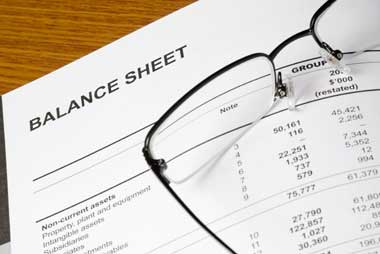
The picture following is an example of balance sheet.


The next meeting, we will talk deeper about how to create the balance sheet. So, don’t miss it guys. J


Written by Dera Hafiyyan


Thursday, May 28, 2015

CFO


Hello guys! Welcome back! Today, we will discuss about CFO. Maybe some of us who have economic or finance background have heard about this terms, but not so sure about the others. So, what is CFO? CFO stands for Chief Financial Officer who is responsible for overseeing the financial activities of the company. CFOs provide leadership and coordination for the administrative, business planning, accounting, finance, and budgeting activities. CFO reports to the CEO (Chief Executive Officer). In some companies, CFOs supervise treasurers and controllers. The treasurer is responsible for handling cash flows, managing capital expenditure decisions, and making financial plans, while the controller is responsible for accounting function.

CFO in a company makes decisions for the stockholders. The decision must be good in financial peripheral from stockholder point of view. So, what is the fundamental goal of CFO? The fundamental goal of CFO is to maximize the current value per share of the existing stock that is owned by the stockholders.

In performing duties and responsibilities, CFO at least require four special skills, which are:
  1. Chief Strategist
CFO will need to use real-time financial information to make crucial quick decisions.
  1. Chief Dealmaker
CFO must be adept at venture capital, mergers, and acquisitions, and strategic partnerships.
  1. Chief Risk Officer
Limiting risk will be even more important as markets become more global and hedging instruments become more complex.
  1. Chief Communicator
Gaining the confidence of stock exchange and media will be essential.

Besides skill, there are others specification that CFO must have, such as:
  1. Have a Master's degree in accounting or business administration, or business experience for more than 10 years in leading major company or division
  2. Have experiences in partnering with executive team
  3. Have a high level of written and oral communication skill

Base on the explanation, we can conclude the CFO has important role in company that is responsible for overseeing the financial activities of the entire company. To complete this task, CFO must have several special skills and experiences in business.


By Dera Hafiyyan
Reference:  

  1. BusinessWeek, August 28, 200, p. 120.
  2. Ross, Stephen A., Randolph W. Westerfield and Jefrey Jaffe. 2010. Corporate finance. 9th ed. New York: McGraw-Hill.

Monday, May 11, 2015

What is Corporate Finance?

To answer this question, we must know the core of  firm, the purpose, before. What is the purpose of firm?  It is to create value for shareholders (owners). So, the shareholder's value is important for all part of the firm. That value is reflected in financial activities which the division or department that oversees the financial activities do. That is the meaning of the corporate finance.

The Balance Sheet Model
All financial activities that we discuss before are recorded in the balance sheet of company.To get deeper understanding about corporate finance, let's look at the figure below, we can see and understand the concept of the balance sheet model that will describe all financial activities that company do.


Based on the figure, we can see assets of the firm are on the left side of balance sheet. And also we can see that there are two types of assets, which are:
1.     Fixed assets 
All assets that will last a long time. Some fixed assets are tangible, such as machinery and equipment. Other fixed assets are intangible, such as patents and trademarks.
2.     Current assets
All assets that have short lives, such as inventory.

On the other side of balance sheet, right side, we can see the form of company financing. Why the company need financing? Because company needs money for investing to assets. There are two kinds of financing that company can obtain, which are:
1.     Debt (loan agreements)
Debt like asset which classified as:
a.    current liability
All short term debt that must be repaid within one year
b.    long term debt
All debt that mustn't be repaid within one year 
2.     Equity shares (stock certificates)
Equity shares is difference between the value of the assets and the debt of the firm

Based on the balance sheet model concept, we can conclude that there are three questions will solved by Finance, which are:
1.     In what long-lived assets should the firm invest? 
The answer of this question will involve the capital budgeting that describes the process of making and managing expenditures on long-lived assets.
2.     How can the firm raise cash for required capital expenditures? 
This question will be discussed in the firm’s capital structure, which represents the proportions of the firm’s financing from current and long-term debt and equity.
3.     How should short-term operating cash flows be managed?
This question concern with a firm’s net working capital defined as current assets minus current liabilities that must be managed by finance manager.

By : Dera Hafiyyan as Finance Lover